Tree Removal vs Tree Lopping — What's the Difference?
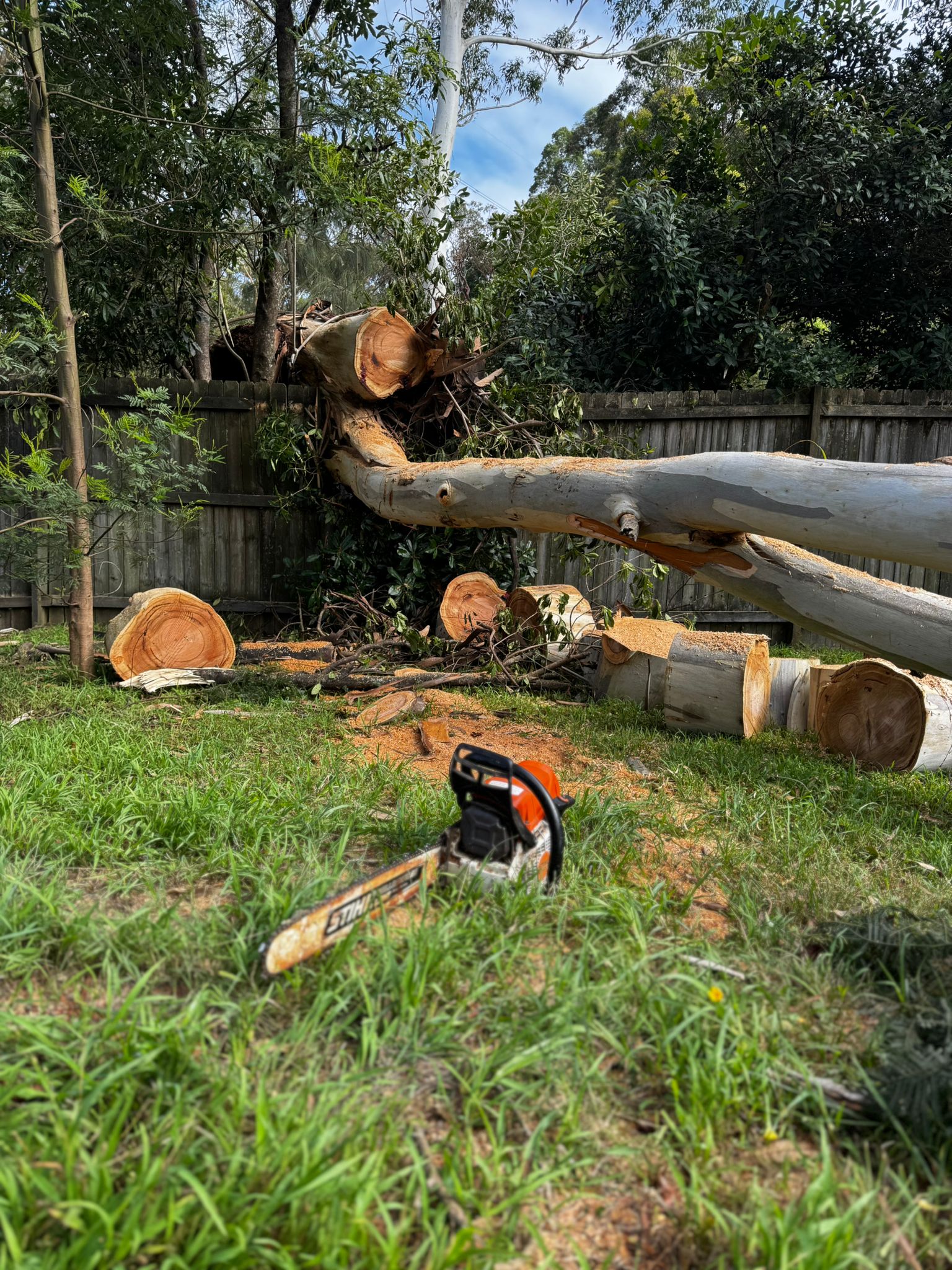
Tree removal is the complete extraction of a tree — trunk, branches, and often the stump — carried out in a controlled, safe manner. Tree lopping is the indiscriminate cutting of branches or the trunk to stubs, with no regard for the tree's health or structure. They are fundamentally different operations, and understanding that difference can save you thousands of dollars and protect your property.
I get asked about this constantly. Homeowners see "tree lopping" advertised cheaply and assume it is the same as professional tree work. It is not. Here is what you need to know.
What Is Tree Removal?
Tree removal involves taking down an entire tree in a planned, methodical way. A qualified arborist assesses the tree, identifies hazards, plans the fell or sectional dismantle, and executes the job safely. The process typically includes:
- Site assessment — evaluating the tree's lean, condition, and surroundings
- Planning the drop zone or rigging strategy for confined spaces
- Sectional dismantling when the tree is near structures, power lines, or other trees
- Debris removal and site cleanup
- Stump treatment — either grinding or poisoning the stump to prevent regrowth
Learn more about our tree removal service and what is involved.
What Is Tree Lopping?
Tree lopping is the practice of cutting branches back to stubs or removing large sections of the canopy without following proper pruning standards. It is sometimes called "hat-racking" or "topping." Lopping typically involves:
- Cutting branches to arbitrary lengths with no regard for branch collar or growth points
- Removing more than 30% of the canopy in a single session
- Leaving large wounds that the tree cannot compartmentalise properly
- No consideration of the tree's long-term health or structural integrity
Why Lopping Is Harmful
The Australian Standard for pruning of amenity trees (AS 4373) explicitly advises against lopping. Here is why:
- Decay and disease — Large stub cuts create entry points for pathogens and decay fungi. The tree cannot seal these wounds effectively.
- Weak regrowth — Epicormic shoots that sprout from lopped branches are weakly attached and prone to failure in storms. You end up with a more dangerous tree than you started with.
- Stress and decline — Removing too much canopy starves the tree of its ability to photosynthesise. This can send the tree into decline or kill it outright.
- Increased cost — You will pay for lopping now, then pay again to deal with the problems it creates. Either ongoing maintenance of weak regrowth or eventual removal of a tree that has been sent into decline.
- Reduced property value — A lopped tree looks terrible. It devalues your property and your streetscape.
When Is Full Removal the Right Choice?
Sometimes a tree genuinely needs to come out. Removal is the right call when:
- The tree is dead or dying and poses a fall risk
- It has significant structural defects that cannot be managed through pruning
- Root damage is undermining foundations, retaining walls, or drainage
- The tree is in the wrong location for its species and size
- You need to clear for construction or development with council approval
- Storm damage has left the tree beyond recovery
What Should You Do Instead of Lopping?
If your tree needs work but does not need to come out, the answer is proper pruning carried out to AS 4373 standards. This includes crown thinning, deadwood removal, crown lifting, and formative pruning. These techniques maintain the tree's health and structure while achieving your goals — whether that is more light, clearance from the house, or reduced wind load.
Check out our tree pruning services for more detail on what proper pruning involves.
The Bottom Line
If someone offers you "tree lopping" at a bargain price, think twice. You are likely paying for damage that will cost more to fix down the track. Always use a qualified arborist who works to Australian Standards. At Certified Tree Service, every job we do follows AS 4373 pruning standards, and Daymian personally oversees every project.
Contact us for a free quote, or call 0485 004 144 to discuss your tree.