Tree Pruning vs Tree Removal: How To Know The Difference
One of the most common questions homeowners ask me is whether their tree needs pruning or removal. It is an important distinction. Pruning a tree that should be removed leaves a hazard in place. Removing a tree that only needed pruning wastes a valuable asset. Getting it right matters — and it is not always obvious to an untrained eye.
Here is how to think about it, and what I look for when assessing trees across the Central Coast, Newcastle, and Sydney.
When Pruning Is the Right Call
Tree pruning is appropriate when the tree is fundamentally healthy and structurally sound, but needs targeted work to reduce risk, improve its form, or manage clearance issues. Here are the most common scenarios where pruning is the answer.
Deadwood in the Canopy
Dead branches are a hazard, but they do not necessarily mean the tree is in trouble. Most mature trees develop some deadwood as part of their natural lifecycle. Removing the dead branches (a process called deadwooding) reduces the risk of them falling while leaving the healthy tree intact.
Overhanging Branches
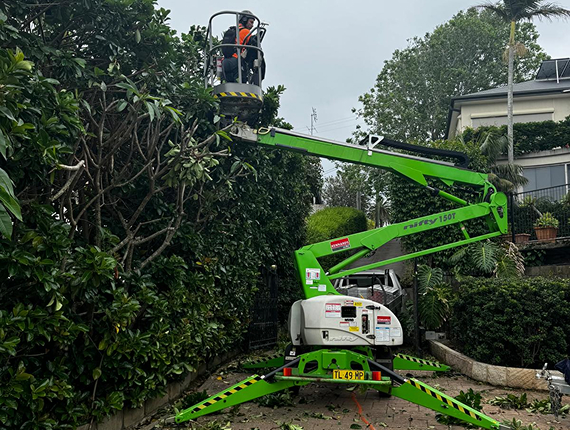
If branches are overhanging your roof, driveway, neighbour's fence, or powerlines, clearance pruning can address the issue without removing the whole tree. We cut back to appropriate branch unions following Australian Standards, which maintains the tree's health and structure.
Dense Canopy Creating Wind Sail Effect
Trees with very dense canopies can catch wind like a sail, making them more susceptible to failure in storms. Crown thinning — the selective removal of a proportion of secondary branches throughout the canopy — reduces wind resistance while keeping the tree's natural shape.
Crossing or Rubbing Branches
Branches that cross and rub against each other create wounds that can become entry points for disease and decay. Removing the weaker of two conflicting branches early prevents bigger problems down the track.
Minor Structural Issues
Some structural defects can be managed with pruning. Reducing the weight on a heavy limb, removing a co-dominant stem while it is still small, or balancing an asymmetric canopy are all examples of structural pruning that can extend the life and safety of a tree.
When Removal Is Necessary
Tree removal is necessary when the tree presents a risk that cannot be adequately managed through pruning or other treatments. Here is what typically pushes a tree into removal territory.
The Tree Is Dead or Dying
A dead tree has zero structural integrity over time. The wood dries out, becomes brittle, and eventually the tree — or large sections of it — will fall. There is no pruning fix for a dead tree. It needs to come down before it comes down on its own terms.
Significant Structural Failure
If the trunk has major cracks, splits, or cavities that compromise more than a third of its cross-section, the tree's structural integrity may be beyond saving. Large failed branches that have torn away from the trunk, exposing heartwood, are another indicator that the tree's structure is compromised.
Severe Root Damage
Trees depend on their roots for both nutrition and stability. If major roots have been severed (by construction, excavation, or natural decay), the tree can become unstable even if the canopy looks healthy. Root damage is particularly dangerous because the failure, when it comes, is often total — the entire tree goes over.
Advanced Decay
Extensive fungal growth on the trunk or at the base, large cavities in the trunk, and soft or spongy wood are all signs of advanced internal decay. A tree can look relatively normal on the outside while being hollow and rotting within.
Location and Target Risk
Sometimes a tree is healthy but its location makes it an unacceptable risk. A large tree directly over a house, a school, a swimming pool, or a high-traffic area carries high consequences if anything goes wrong. In these cases, the responsible decision may be removal — even though the tree itself is not yet failing.
The Grey Area
Many trees fall somewhere in between. They have some issues but are not clearly in need of removal. This is where a professional assessment matters most. A qualified arborist can evaluate the tree's condition, estimate its useful life expectancy, assess the risk relative to targets (what it could hit if it failed), and recommend the most appropriate course of action.
Sometimes the answer is a combination: heavy pruning now to reduce risk, followed by monitoring, with a removal plan in place for when the tree reaches end of life.
My Recommendation
If you are unsure whether your tree needs pruning or removal, do not guess. Book a free assessment with a certified arborist. At Certified Tree Service, Daymian inspects every tree personally, explains what he finds, and gives you an honest recommendation. If it can be saved with pruning, he will tell you. If it needs to come down, he will explain why.
Get in touch for a free, no-obligation assessment. We service the Central Coast, Newcastle, and Sydney's North Shore.