
Storm Damage Tree Emergency: What To Do First
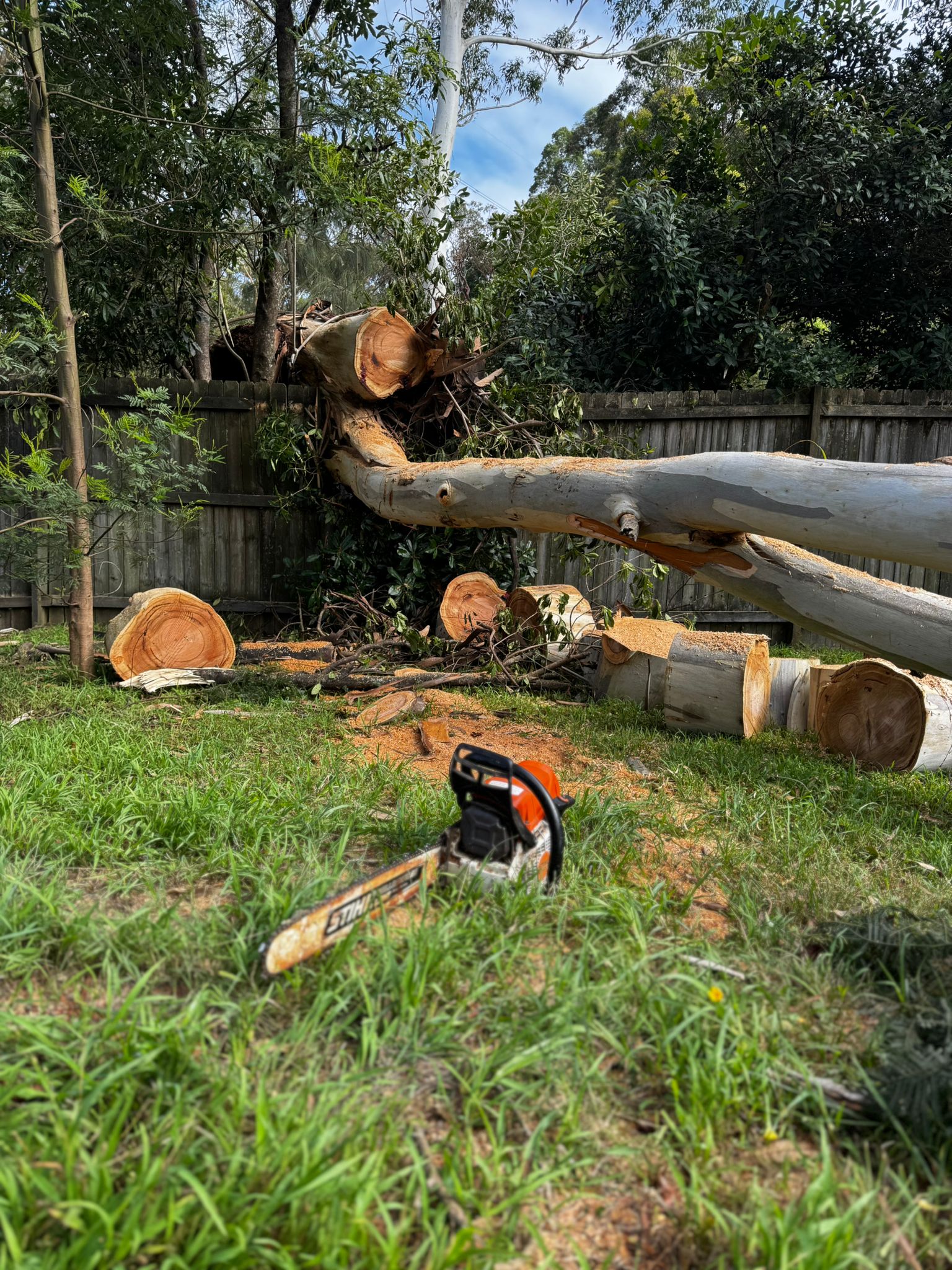
The Central Coast, Newcastle, and greater Sydney cop some serious storms. Heavy rain, strong winds, and the occasional severe weather event can bring down branches, split trees, and uproot entire root systems. When it happens to your property, it is stressful — but what you do in the first hours matters.
Here is a clear, step-by-step guide for what to do when storm damage affects the trees on your property.
Step 1: Stay Safe and Stay Back
This is the most important step. After a storm, do not approach damaged trees, hanging branches, or fallen limbs until you are sure it is safe. Damaged trees can be unpredictable — a partially fallen tree can shift and come down further without warning.
Watch out for these specific hazards:
- Downed powerlines. If a tree has fallen on or near a powerline, stay at least eight metres away and call Ausgrid (13 13 88) or Essential Energy (13 23 91) immediately. Do not touch the tree or anything in contact with it.
- Hanging branches. Branches caught in the canopy can fall at any time. Do not walk or stand under them.
- Leaning trees. A tree that is leaning after a storm may have compromised roots and could fall further.
If in doubt, keep your family and pets away from the area and wait for professional help.
Step 2: Document the Damage
Once it is safe to approach the area (not the tree itself — the general area), take photos and videos of the damage. Capture the tree, the damage to your property, the surrounding area, and any debris. Do this from multiple angles. This documentation is important for two reasons: your insurance claim and the arborist's assessment.
If the tree has damaged your house, fence, car, shed, or any other structure, photograph the point of impact and the extent of the damage as thoroughly as you can.
Step 3: Call Your Insurance Company
Contact your home insurance provider as early as possible. Most policies cover storm damage to property caused by fallen trees, but the specifics vary between insurers. Key questions to ask:
- Does my policy cover tree removal costs?
- Is there an excess that applies to storm damage claims?
- Do I need to get multiple quotes, or can I use my own arborist?
- Is there a time limit for lodging the claim?
Keep a record of who you spoke to, when, and what was agreed.
Step 4: Call a Certified Arborist
Storm damage tree work is not a job for a handyman, a mate with a chainsaw, or a DIY approach. Damaged trees are unpredictable, heavy, and often under tension in ways that are not visible. Cutting the wrong branch or making the wrong cut can cause the tree to move in unexpected directions.
Call a certified arborist who has experience with storm damage response. At Certified Tree Service, we prioritise emergency callouts after major storms and can often attend the same day or next morning.
When you call, be ready to describe:
- What has happened (fallen tree, broken branches, leaning tree)
- What the tree has fallen on or near (house, fence, powerline, car)
- Whether anyone can access the area safely
- Whether powerlines are involved
Step 5: Secure the Area While You Wait
If you are waiting for an arborist or power company, take simple steps to keep people safe. Put up warning tape or barriers if you have them. Keep children and pets indoors or in a safe area. If the damage has created a hazard on a shared driveway or public footpath, contact your local council to report it.
Do not attempt to cut or move the tree yourself. Even small branches under tension can spring back with significant force.
Step 6: Let the Professionals Handle It
When your arborist arrives, they will assess the situation, identify all hazards, and develop a safe removal plan. Storm damage work often involves:
- Relieving tension in bent or compressed limbs before cutting
- Sectional dismantling of partially fallen trees
- Coordination with power companies for trees on or near lines
- Removing debris from roofs or structures without causing additional damage
At Certified Tree Service, Daymian personally leads every storm damage response. The work is carried out methodically, with safety as the absolute priority.
After the Emergency
Once the immediate hazard has been dealt with, take the time to inspect the rest of your property for less obvious damage. Storm-weakened trees may not have fallen but could have structural damage that makes them hazardous in the next event. A post-storm tree assessment by an arborist is a smart investment in your property's ongoing safety.
If a tree needs to be fully removed, we handle the complete removal process including stump grinding and full site clean-up.
Keep our number saved in your phone for next time: 0485 004 144. When a storm hits, you want a certified professional you can trust on the other end of the line.