Fire Risk Reduction: Vegetation Management for Rural NSW Properties
If you own rural or semi-rural property in NSW — whether that is acreage on the Central Coast, a property near Cessnock, or land in the Hills District — fire risk is something you need to take seriously. The combination of Australian bush, dry summers, and strong winds creates real danger. And one of the most effective things you can do to protect your home and family is manage the vegetation on your property.
This is not about clearing everything. It is about strategic management that creates defendable space, reduces fuel loads, and gives firefighters (and you) the best chance of saving your property if a fire does come.
Understanding Defendable Space
The NSW Rural Fire Service (RFS) recommends creating defendable space around buildings. This is the area where vegetation is managed to reduce fire intensity and provide a buffer between the bush and your home.
Defendable space is typically divided into two zones:
Inner Protection Area (IPA)
This is the area closest to your house, usually within 10 metres of the building. In this zone:
- Keep grass mown short (under 100mm)
- Remove all dead vegetation, leaf litter, and bark accumulations
- Ensure no tree canopy overhangs the roof
- Trim lower branches of trees to at least 2 metres above ground level to prevent ground fire climbing into the canopy
- Remove any shrubs or plants directly against the house
- Keep gutters clear of leaves and debris
Outer Protection Area (OPA)
This extends from the IPA out to the property boundary or a minimum of 20 to 50 metres from buildings (depending on the slope and vegetation type). In this zone:
- Thin tree canopies to create gaps between crowns — avoid continuous canopy cover
- Remove dead trees and branches
- Clear undergrowth and scrub
- Reduce ground fuel by managing leaf litter and fallen timber
- Create breaks in vegetation continuity
Practical Steps You Can Take
Remove Dead Trees and Branches
Dead timber is the highest-risk fuel on your property. Dead trees burn intensely and can throw embers long distances. Dead branches in living trees fall into the fuel bed on the ground and create ladder fuels that allow fire to climb into the canopy. Removing dead trees and deadwood pruning are high-priority fire risk actions.
Thin Dense Vegetation
Dense clusters of trees and shrubs create continuous fuel that allows fire to move rapidly through your property. Selective land clearing and thinning creates gaps that can slow or stop fire spread. You do not need to clear everything — strategic thinning is more effective and better for the environment.
Manage Ground Fuel
Fallen leaves, bark, twigs, and branches on the ground are the primary fuel that carries fire across your property. Regular raking, mowing, and removal of fallen timber in your protection zones significantly reduces fire intensity. Chipped mulch from tree work can be used, but keep it at a reasonable depth (under 75mm) and away from buildings.
Lift Tree Canopies
Low-hanging branches allow ground fire to climb into tree canopies, where it becomes much harder to control. Lifting the canopy — removing lower branches to at least 2 metres above ground — creates a gap between ground fuel and the canopy. This is one of the most effective and least destructive vegetation management actions you can take.
Create Access for Fire Trucks
If a fire does reach your property, you want fire trucks to be able to access your buildings. Maintain clear driveways with at least 4 metres width and 4 metres overhead clearance. Ensure turn-around areas are available, and keep vegetation clear of any water supply points or tanks.
Council and Environmental Considerations
Before undertaking large-scale vegetation clearing, be aware that council regulations and environmental protections may apply. Even on rural land, there are rules about clearing native vegetation. However, NSW legislation (specifically the 10/50 vegetation clearing code) allows property owners in designated bush fire prone areas to clear trees within 10 metres and vegetation within 50 metres of a dwelling without approval, subject to certain conditions.
Check whether your property falls within a bush fire prone area on the NSW RFS mapping tool. If you are unsure about what you can clear, contact us and we can advise based on your specific situation.
When to Get Professional Help
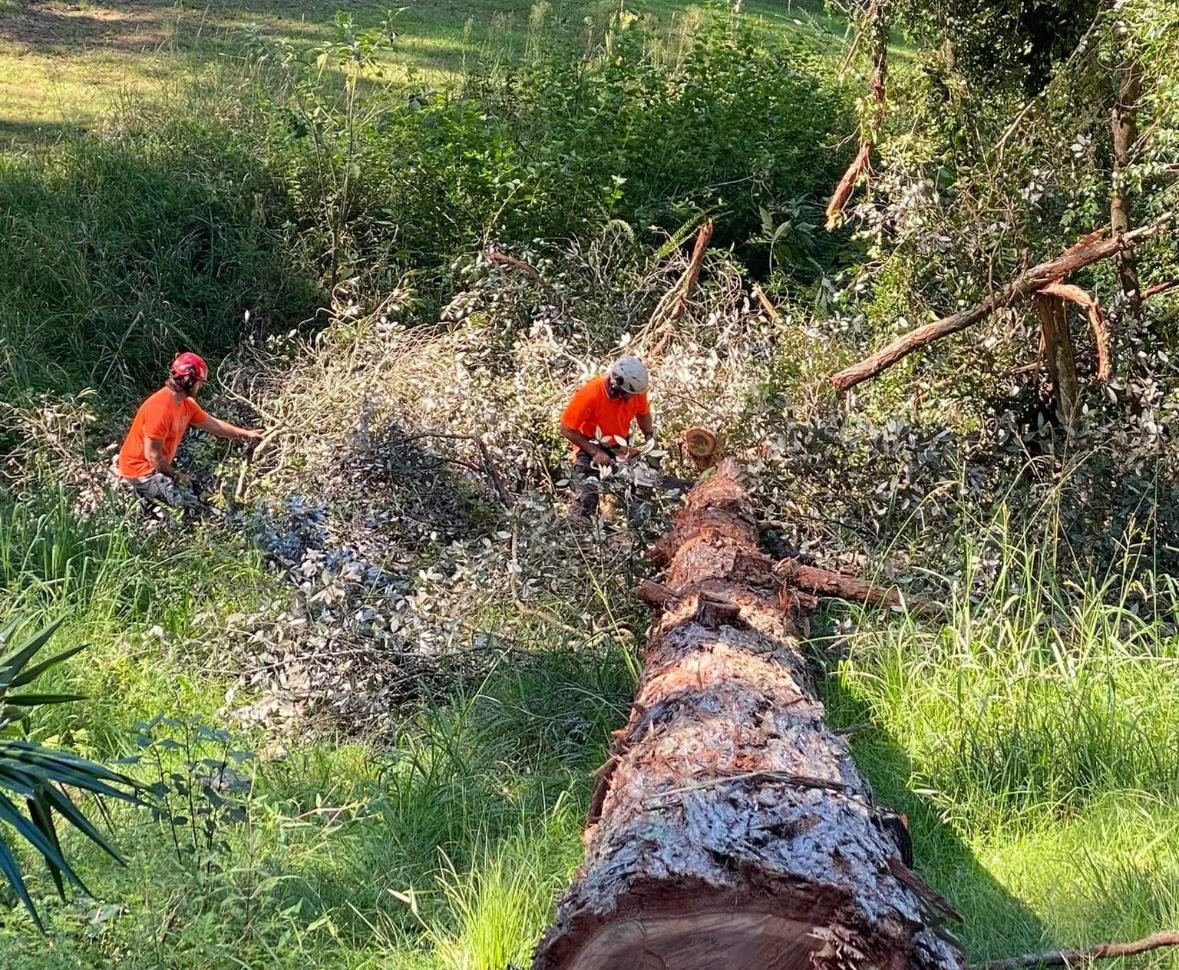
While you can handle mowing, raking, and basic shrub management yourself, tree work should be done by a qualified professional. Felling dead trees, thinning mature vegetation, and canopy lifting all require proper equipment, skills, and safety protocols.
At Certified Tree Service, we help rural and semi-rural property owners across the Central Coast, Newcastle, and Sydney manage fire risk through professional vegetation management. We can assess your property, identify the highest-risk vegetation, and develop a practical management plan that works for your budget.
Do not wait for fire season to start. The best time to prepare is now. Call us on 0485 004 144 for a property assessment.