DIY Tree Work Gone Wrong: Why You Need a Certified Arborist
I understand the temptation. You have got a tree that needs work, a chainsaw in the shed, and a weekend free. How hard can it be? The answer, unfortunately, is that tree work is one of the most dangerous activities you can do around the home. And it is not just about the risk to you — it is about the risk to your property, your insurance, and potentially your neighbours.
Here is an honest look at why DIY tree work so often goes wrong, and why engaging a certified arborist is not just a nice-to-have — it is the smart, safe, and often cheaper option in the long run.
The Injury Statistics Are Serious
In Australia, falls from heights and being struck by falling objects are among the leading causes of serious workplace injury and death — and trees involve both. Safe Work Australia data consistently shows that tree work and vegetation management are high-risk activities. These are not just workplace injuries — a significant number involve homeowners and untrained individuals.
Chainsaws, heights, heavy branches, and unpredictable tree behaviour are a dangerous combination even for trained professionals with proper equipment. For someone without training, the risk multiplies significantly.
Trees Do Not Behave the Way You Expect
This is the thing most people do not understand until they are standing next to a tree with a saw in their hand. Trees are not predictable. Here are some of the ways they catch people out:
Spring-Back and Tension
Branches that are bent, compressed, or held in place by other branches are under enormous tension. When you cut them, they can spring back violently and with enough force to cause serious injury or death. A trained arborist reads the tension in a tree before making a cut. An untrained person often does not even know to look.
Off-Target Felling
Dropping a tree where you want it to land is a skill that takes years to develop. Trees have leans, weight biases, wind drag, and structural characteristics that all affect where they fall. Getting it wrong by even a few degrees can mean the difference between the tree landing in the open and landing on your house, car, fence, or power line.
Chainsaw Kickback
Kickback occurs when the upper portion of the chainsaw bar tip contacts an object, or when the wood closes in and pinches the saw chain. The saw can kick back towards the operator with extreme speed and force. It is the most common cause of serious chainsaw injuries and it happens in a fraction of a second.
Weight Misjudgement
People consistently underestimate the weight of trees and branches. A green branch that looks manageable might weigh 200 or 300 kilograms. Trunk sections are even heavier. Dropping that weight from height, or trying to handle it on the ground, causes injuries every year.
Your Insurance May Not Cover You
Here is something many people do not consider until it is too late. If you injure yourself doing DIY tree work, your home insurance will not cover your medical bills — that is what health insurance and income protection are for. But if you damage your own property, your neighbour's property, or injure someone else while doing amateur tree work, your insurance company may reduce or deny the claim on the basis that you were undertaking work that should have been done by a qualified professional.
Compare this with hiring an insured, certified arborist. Our public liability insurance covers any damage that occurs during the work. Our workers compensation covers our crew. You are protected — and you do not have to swing a chainsaw.
The Hidden Costs of DIY
When people consider DIY tree work to save money, they often overlook the real costs:
- Equipment: A decent chainsaw costs $500 to $1,500. Safety gear (helmet, visor, ear protection, chaps, boots, gloves) adds another $300 to $500. Rope, rigging gear, ladders — it adds up fast for a one-off job.
- Waste disposal: Without a chipper, you need to cut everything into small pieces and either pile it up, take it to the tip (tip fees add up), or pay for a skip bin.
- Time: What a professional crew handles in a day with proper equipment might take you multiple weekends.
- Damage repair: If things go wrong — a branch through the roof, a dented car, a crushed fence — the repair costs can dwarf what the professional job would have cost.
- Medical bills: An emergency room visit, surgery, or extended rehabilitation from a chainsaw or falling injury is a life-changing event, not just a financial one.
When It Makes Sense to Call a Professional
As a general rule, if any of the following apply, call a certified arborist:
- The tree or branch is above head height
- The tree is near a building, fence, powerline, or pool
- You need to use a ladder or climb
- The tree is dead or structurally damaged
- Branches are under tension or compression
- The tree is large enough that a failure would cause property damage
For small shrubs and low branches you can reach from the ground with hand tools, DIY can be fine. For anything beyond that, the risk-reward calculation points clearly towards professional help.
The Certified Tree Service Difference
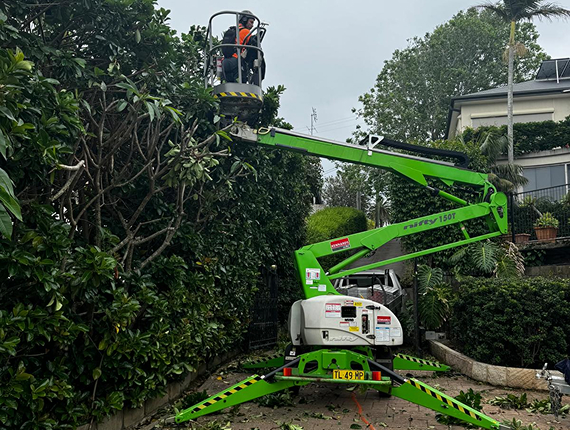
At Certified Tree Service, our owner Daymian is a qualified AQF Level 3 arborist with over 13 years of experience. He is on site for every job. We carry full insurance, use proper equipment, and follow safe work procedures on every task — whether it is a simple prune or a complex removal.
Getting a quote is free and takes no time at all. Contact us or call 0485 004 144. It might just be the best decision you make this weekend.